Sanctions for Immigration Consultants in Canada: What IRCC Announced and What It Means for Your Case
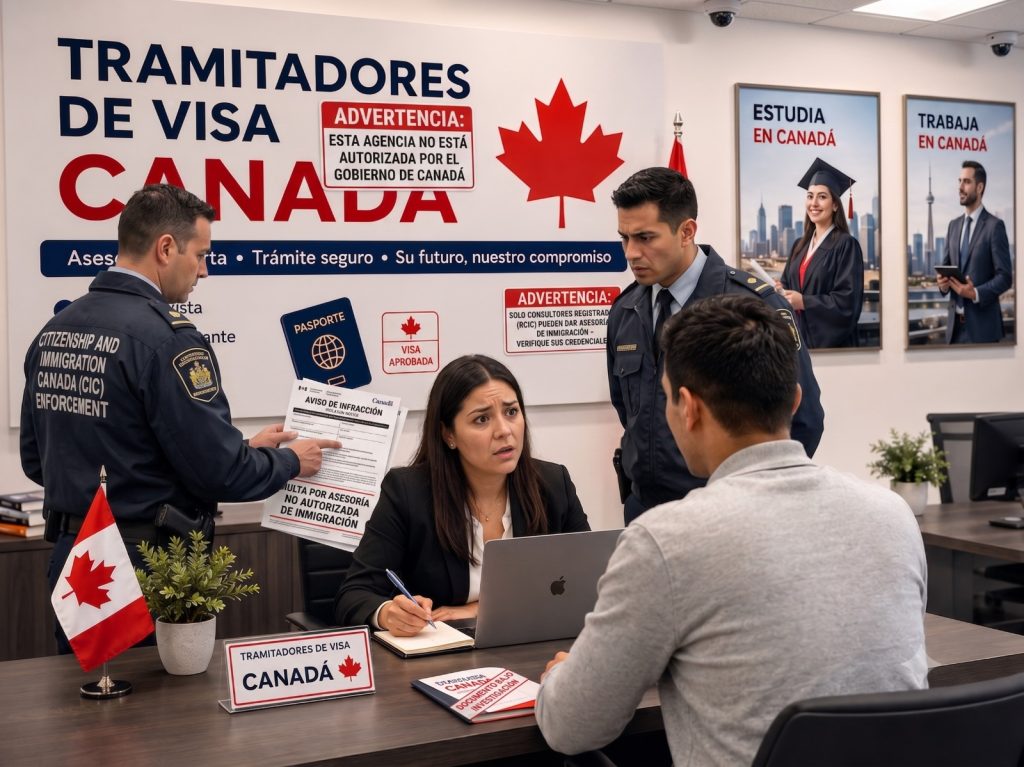
On July 28, 2026, Immigration, Refugees and Citizenship Canada (IRCC) took a concrete step toward new sanctions for immigration consultants in Canada: the department reopened the competition to hire the independent reviewers who will be part of the new disciplinary system for migration representatives who break the law.
At first glance, this may look like a minor administrative update. In reality, it is a meaningful step toward stronger oversight of anyone who charges for immigration advice, and it helps protect people from misconduct or from those practising without authorization.
Here is what the announcement says, where this measure comes from, and most importantly what it means for your process.
What exactly did IRCC announce about sanctions for immigration consultants?
According to the official IRCC notice, many people who want to immigrate to Canada or obtain citizenship rely on legal representatives or immigration consultants for guidance. That is why IRCC is taking action to protect the integrity of the immigration system and to make sure representatives provide honest, professional, and ethical services.
The notice specifies that IRCC will introduce administrative penalties and consequences later in 2026 for those who break the rules while providing paid immigration advice or representation. The new system will also include a review process: if someone receives a penalty, they can request that an independent reviewer examine their case and decide whether it should stand, be changed, or be removed. What was announced on July 28 is, specifically, the reopening of the competition to fill those two reviewer positions.
Where it comes from: the January 2025 proposal
This announcement did not appear out of nowhere. Back in January 2025, IRCC introduced an initiative explaining that new rules would be brought in to sanction paid representatives both authorized and unauthorized who break the law while representing or advising applicants on immigration matters. Among the proposed measures are fines of up to 1.5 million dollars for advising a client to misrepresent themselves to the government.
The regulation would also require the government to publicly publish the sanctioned person’s name, the nature of the violation, the fine amount, and whether it was paid.
Although the sanctions system is not yet in force, what exists today is the proposed regulatory framework, published in the Canada Gazette. These are the key points to keep in mind:
Key points of the proposed regulation
- It is prohibited for a person to represent or advise someone for payment in an immigration or citizenship matter unless authorized by law meaning a lawyer, paralegal, or licensed immigration consultant.
- The most serious violations inducing an applicant to make a false statement, committing fraud, or withholding relevant information would carry a base fine of $15,000.
- Offering or providing paid immigration advice without authorization would carry a base fine of $5,000.
- Fines are cumulative per violation, up to a cap of $1.5 million per notice.
- A sanctioned person has the right to request a review of their case within 30 days of receiving the notice which is why the reviewer positions being filled now matter.
- If the violation is ultimately confirmed, the government must publish the person’s or business’s name and information on its website.

Why this measure matters if you want to migrate to Canada
For years, many people seeking to migrate to Canada have run into trouble not because of the immigration system itself, but because of incorrect advice or guidance from unauthorized individuals. That is why, in my practice, I always stress the importance of verifying who is guiding your process from the very beginning.
In Canada, the law sets out who is authorized to charge for immigration and citizenship advice or representation. This includes lawyers and paralegals authorized by a provincial law society, such as the Law Society of Ontario, and immigration consultants licensed by the College of Immigration and Citizenship Consultants (CICC).
In other words, any person or business visa advisors, “ghost consultants,” travel agencies, and others who charges to manage an immigration process without this authorization is operating outside the legal framework, regardless of their experience or how many cases they claim to have handled. This new sanctions system strengthens IRCC’s oversight and allows consequences to be applied to those who break the rules, including financial penalties and the publication of confirmed cases
How to avoid unauthorized representatives in your immigration process
- Verify your advisor’s licence. Every licensed immigration and citizenship consultant must appear on the CICC public register. If they are a lawyer, you can verify them through their provincial law society’s directory.
- Be wary of anyone who avoids sharing their credentials. An authorized representative has no problem giving you their licence number; an unauthorized one almost always does.
- Remember that no legitimate representative can guarantee an outcome. Not an approved visa, not residency, not an exact processing time — that is decided by the government, not by whoever is advising you. Anyone who promises it as a certainty is, at the very least, not being honest with you.
- Keep everything in writing. Contracts, receipts, emails. If you ever need to file a formal complaint with the CICC, a law society, or IRCC itself, that evidence makes the difference.
Migrating with responsible information is the first step to protecting your future
With more than 26 years representing immigration cases, I have seen situations where people without proper authorization, or without professional ethics, take advantage of those trying to build a future in Canada. The consequences are not only financial — poor advice can also affect someone’s immigration opportunities and their family’s life plans.
Migrating to Canada is an important decision that requires clear information, responsible guidance, and professional support. You deserve to work with people who act with transparency, explain your real options, and speak to you honestly, even when the answer is not the one you were hoping for. The best tool to protect your immigration process is responsible information and always verifying who is authorized to advise you. If you want to look at your case with that same honesty, you can book a legal immigration consultation and start from real information, not promises
Angélica González-Blanco — Licensed legal representative, member of the College of Immigration and Citizenship Consultants (CICC) and the Law Society of Ontario. Verify this information on the official register: register.college-ic.ca. Educational information; this does not constitute legal advice